

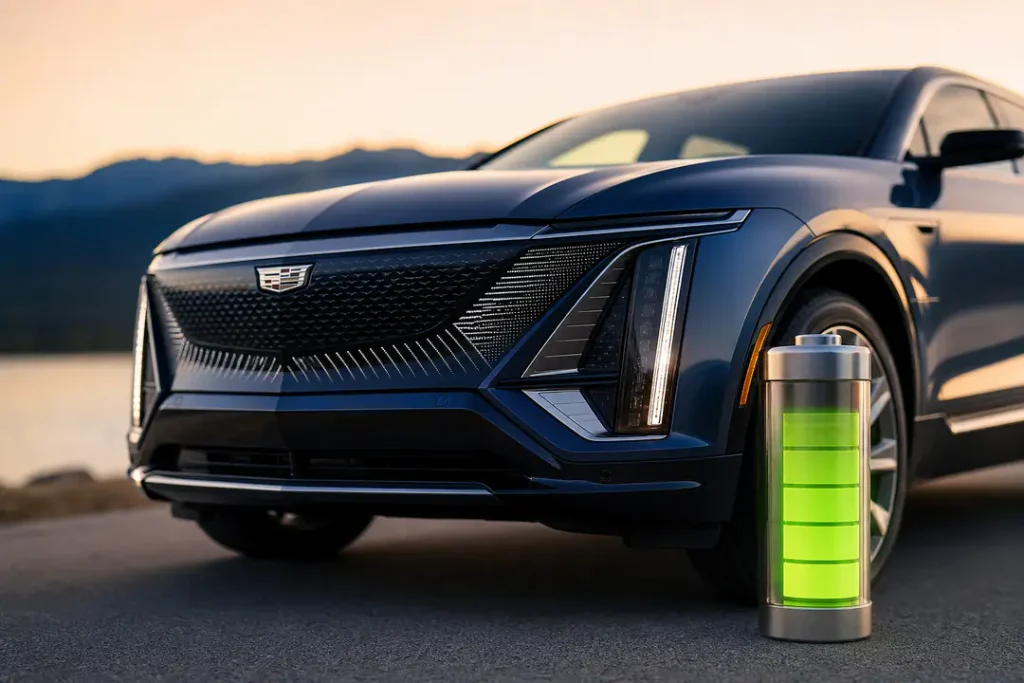
Do the Driving Modes in Cadillac Lyriq Offer Different Ranges or Battery Usages? This is one of the most common questions among current Cadillac Lyriq owners and prospective electric vehicle buyers. Modern EVs offer several driving modes that allow drivers to customize how the vehicle responds to acceleration, steering, traction, and regenerative braking. These modes are designed to improve comfort, performance, or efficiency depending on road conditions and personal preferences.
The Cadillac Lyriq is built on General Motors’ Ultium battery platform and combines premium luxury with advanced electric technology. While its official driving range depends primarily on battery capacity, weather, driving habits, tire pressure, terrain, and vehicle load, many drivers wonder whether changing the driving mode itself noticeably affects battery usage.
The simple answer is yes—but the difference is usually indirect rather than dramatic. Driving modes change how efficiently power is delivered, how aggressively the vehicle accelerates, and how energy is recovered during deceleration. Understanding these adjustments helps drivers maximize both performance and range without sacrificing comfort.
This guide explains how Cadillac Lyriq driving modes work, their impact on battery consumption, practical driving tips, and ways to improve overall EV efficiency.
Understanding Cadillac Lyriq Driving Modes
The Cadillac Lyriq offers selectable driving modes that allow drivers to tailor the vehicle’s behavior for different driving situations.
Although available settings may vary slightly depending on the model year and software version, most Lyriq models include modes such as Tour, Sport, Snow/Ice, and customizable My Mode.
Each driving mode adjusts multiple vehicle systems simultaneously rather than changing only one setting.
These adjustments may include:
- Accelerator pedal sensitivity
- Steering feel
- Traction control calibration
- Power delivery
- Regenerative braking characteristics
- Vehicle responsiveness
Instead of increasing or decreasing battery capacity, these modes influence how efficiently stored energy is used during everyday driving.
As a result, different driving styles naturally produce different levels of energy consumption.
Does Driving Mode Directly Change Battery Range?
One common misconception is that selecting a different driving mode instantly changes the battery’s maximum capacity.
In reality, driving modes do not increase or decrease the physical amount of energy stored inside the battery.
Instead, they influence how quickly that energy is consumed.
For example, aggressive acceleration requires more electrical power than gradual acceleration.
A driving mode that encourages smoother throttle response often helps reduce unnecessary energy consumption.
Similarly, regenerative braking settings may recover slightly more electricity during deceleration, improving efficiency over longer trips.
The resulting range difference depends primarily on the driver’s behavior rather than the selected mode alone.
In many everyday driving situations, the difference may be relatively small if driving habits remain consistent.
Tour Mode and Everyday Efficiency
Tour Mode is generally designed for comfortable daily driving.
It provides balanced acceleration, smooth steering, and predictable vehicle responses suitable for city streets and highways.
Because accelerator response is less aggressive than performance-focused settings, many drivers naturally apply power more gradually.
Gentle acceleration often improves overall efficiency.
Tour Mode also delivers a refined driving experience by prioritizing passenger comfort over maximum responsiveness.
For commuters covering long daily distances, this mode frequently offers one of the best combinations of comfort and energy efficiency.
Although Tour Mode itself does not magically increase range, its balanced characteristics encourage driving behaviors that help preserve battery power.
Many owners use this mode for the majority of everyday travel.
Sport Mode and Battery Consumption
Sport Mode changes the personality of the Cadillac Lyriq considerably.
Throttle response becomes quicker, acceleration feels more immediate, and steering often becomes firmer.
These adjustments create a more engaging driving experience.
However, rapid acceleration demands higher electrical output from the battery.
Frequent hard acceleration naturally increases energy consumption regardless of vehicle type.
This means drivers who regularly use Sport Mode aggressively may notice reduced driving range compared with calmer driving styles.
It is important to understand that Sport Mode itself is not inherently inefficient.
If driven smoothly without frequent full-power acceleration, battery usage may remain similar to other modes.
Driver behavior continues to play the largest role in determining overall efficiency.
Snow and Ice Mode for Challenging Conditions
Snow and Ice Mode is designed primarily for improved traction rather than maximum efficiency.
This mode reduces wheel spin by softening accelerator response and optimizing traction control systems.
Gentle power delivery helps maintain better control on slippery roads.
Because smoother acceleration often reduces unnecessary wheel spin, energy usage can remain relatively efficient under winter driving conditions.
However, cold temperatures themselves have a much larger impact on EV range than the selected driving mode.
Low temperatures reduce battery efficiency and increase energy consumption due to cabin heating and battery conditioning.
Therefore, although Snow Mode helps improve safety, winter weather typically affects driving range more significantly than the mode selection alone.
Regenerative Braking and Energy Recovery
One of the most valuable efficiency features in electric vehicles is regenerative braking.
Instead of wasting energy as heat during braking, regenerative systems convert part of the vehicle’s motion back into electricity and return it to the battery.
The Cadillac Lyriq allows drivers to take advantage of regenerative braking through various settings, including one-pedal driving.
Frequent use of regenerative braking can improve efficiency, particularly during city driving with frequent stops.
Although no system recovers all energy used during acceleration, regenerative braking helps reduce overall battery consumption over time.
Drivers who learn to anticipate traffic conditions and slow down gradually often recover more energy than those relying heavily on traditional friction brakes.
Developing smooth driving habits complements regenerative braking for improved efficiency.
Other Factors That Affect Cadillac Lyriq Range
Driving mode represents only one small part of overall energy consumption.
Several additional factors have much greater influence on battery range.
Driving Speed
Highway speeds consume considerably more energy because aerodynamic resistance increases rapidly as speed rises.
Maintaining moderate, consistent speeds usually improves efficiency.
Outside Temperature
Extreme heat and cold both affect battery performance.
Cold weather often reduces available range due to battery chemistry and cabin heating requirements.
Tire Pressure
Properly inflated tires reduce rolling resistance.
Low tire pressure forces the vehicle to use more energy while driving.
Vehicle Load
Additional passengers, cargo, or roof-mounted equipment increase vehicle weight and aerodynamic drag.
These factors require additional battery power.
Terrain
Driving uphill consumes more energy, while downhill driving allows regenerative braking to recover part of that energy.
Understanding these influences helps drivers focus on the factors that matter most.
Tips for Maximizing Cadillac Lyriq Battery Range
Owners can significantly improve real-world efficiency by adopting smart driving habits.
Accelerate gradually whenever possible instead of making sudden starts.
Maintain consistent speeds using cruise control during highway travel when appropriate.
Take advantage of regenerative braking by anticipating traffic and reducing unnecessary hard braking.
Keep tires inflated according to manufacturer recommendations.
Remove unnecessary cargo to reduce vehicle weight.
Precondition the cabin while the vehicle remains connected to a charger, especially during winter.
Use climate controls efficiently rather than selecting maximum heating or cooling continuously.
Plan charging stops during longer trips using available route-planning tools.
Regular software updates may also improve vehicle efficiency through system optimizations released by the manufacturer.
Small adjustments made consistently often produce meaningful improvements in overall driving range.
Choosing the Best Driving Mode
The ideal driving mode depends on road conditions and personal preferences.
Tour Mode generally provides the best balance for daily commuting and longer trips.
Sport Mode suits drivers seeking more responsive acceleration and dynamic handling.
Snow and Ice Mode should be reserved for slippery roads where traction becomes the highest priority.
Custom driving settings allow owners to personalize steering feel and responsiveness according to individual preferences.
Rather than constantly switching between modes, most drivers benefit from selecting the setting that best matches current driving conditions.
The overall impact on efficiency will depend much more on smooth, predictable driving than on the selected mode itself.
Final Thought
Do the Driving Modes in Cadillac Lyriq Offer Different Ranges or Battery Usages? The answer is yes, but only indirectly. Driving modes do not change the battery’s physical capacity. Instead, they influence how efficiently electrical energy is delivered, recovered, and consumed through adjustments to acceleration, steering, traction, and regenerative braking.
Tour Mode generally promotes efficient everyday driving, while Sport Mode encourages stronger acceleration that may increase battery usage if driven aggressively. Snow and Ice Mode focuses on maintaining traction in challenging conditions rather than maximizing range.
Ultimately, the greatest influences on Cadillac Lyriq battery performance remain driving habits, speed, weather, terrain, tire maintenance, and effective use of regenerative braking. By combining appropriate driving modes with efficient driving techniques, owners can enjoy both impressive performance and excellent real-world driving range.
FAQs
Do Cadillac Lyriq driving modes change battery capacity?
No. Driving modes do not alter the battery’s physical capacity. They only change how efficiently energy is used.
Which Cadillac Lyriq driving mode offers the best efficiency?
Tour Mode generally provides the best balance of comfort and efficiency for everyday driving, although smooth driving habits remain the biggest factor.
Does Sport Mode reduce driving range?
Sport Mode can reduce range if drivers frequently accelerate aggressively because rapid acceleration consumes more battery power.
Does regenerative braking improve battery efficiency?
Yes. Regenerative braking recovers part of the vehicle’s kinetic energy and returns it to the battery, helping improve overall efficiency.
What affects Cadillac Lyriq range the most?
Driving speed, outside temperature, acceleration habits, tire pressure, terrain, climate control usage, and vehicle load generally have a greater impact on range than driving mode alone.
Should I change driving modes regularly?
Select the mode that best matches current driving conditions. For most daily trips, Tour Mode works well, while Sport and Snow modes serve more specialized purposes.
