

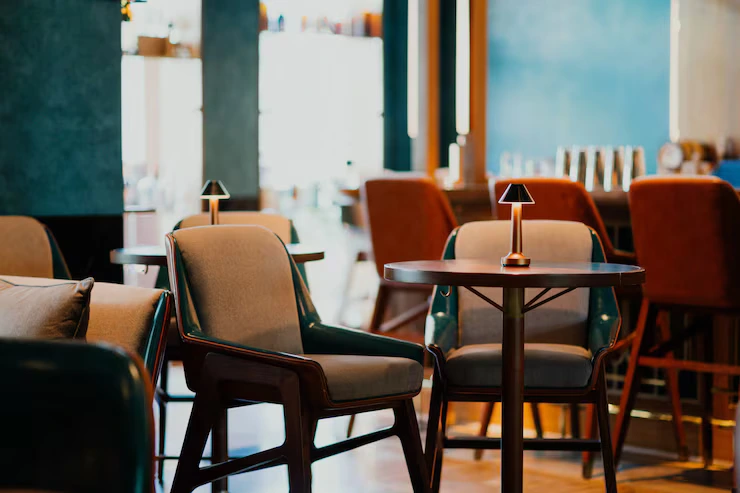
Scroll any food feed for five minutes and count what’s actually in frame. The pasta, obviously. Hands, glasses, someone mid-laugh. And behind all of it, in nearly every single shot, chairs. Not the neon sign the owner paid a fortune for. Not the mural. Chairs, over and over, photobombing their way to the top of the visual hierarchy.
This is not an accident of framing; it’s geometry. Owners who understand it choose restaurant chairs like they’re casting a supporting actor who will appear in every scene, because that’s literally the job. Here’s why the humble chair out-photographs almost everything else in the building, and what makes certain ones the stars.
They Live at Camera Height
Simple physics first, because the explanation starts with altitude. Phones come out after people sit down, which parks the lens somewhere around 40 inches off the floor. Everything interesting at that altitude gets photographed constantly; everything above it gets cropped into oblivion.
Wall art hangs for standing eyes and vanishes from seated shots. Light fixtures exist as bokeh at best. But chair backs? Chair backs live exactly in the frame, table after table, angle after angle. The most photographed design element in any restaurant is the one at shoulder height, and it isn’t close.
Repetition Reads as Style
One beautiful chair is furniture. Twenty identical ones are a pattern, and cameras love patterns with an almost embarrassing devotion. Rows of matching seats give a photo rhythm, depth, and that composed-on-purpose feeling that makes strangers save the post and search the location.
Classical composition principles like the golden ratio work because human eyes crave orderly repetition with a focal point, and a dining room full of one confident chair delivers exactly that. Mismatched seating, whatever its bohemian intentions, photographs as visual static.
Silhouette Beats Detail Every Time
Here’s the part most owners get backwards. Intricate details, carved flourishes, subtle stitching, exotic wood grain, disappear completely at feed resolution. What survives the compression is outline: the hoop of a bentwood, the X of a cross-back, the clean ladder of horizontal slats.
- Strong silhouettes stay recognizable even blurred in a background.
- High-contrast frames, dark chair against light wall, draw their own borders.
- Distinctive shapes become the room’s visual signature across thousands of posts.
A chair with a great outline is a logo the restaurant never had to design. People literally identify venues by their seats now, which is a sentence that would have confused everyone thirty years ago.
Texture Is the Filter That’s Already There
Certain materials do favors for every photo taken near them. Matte wood warms a frame. Woven cane adds intricacy that reads as artisanal. Saturated velvet drinks light and gives depth. Chrome, meanwhile, blows out highlights, and glossy plastic bounces glare like it’s being paid to ruin shots.
The most photogenic rooms lean into light-absorbing, texture-rich seating, and it shows up in the analytics. Same latte, same window, and one room’s photos consistently look editorial while another’s look fluorescent. The difference was upholstered.
The Caption Practically Writes Itself
Now for the portion this site cares about most. Photos of great seating generate better captions, because the seat is where the feeling lives. “Found my place.” “Not leaving. Ever.” “This chair resonates with me.” The seat provides the caption writer with a subject that has personality; the spaghetti alone rarely does.
Look at the pattern in your own saved posts. The captions that stick are about belonging, abiding, claiming a place, and each of those feelings is furniture-shaped. The rooms that give the feeling get the caption, the tag, and the friend group that turns up next weekend to rebuild it.
What Owners Should Actually Do About It
The playbook is refreshingly concrete. Pick one chair with a strong silhouette and commit to it across the room. Choose matte, textured finishes over shine. Put the boldest color where phones point: seat backs and banquette walls, never the ceiling. Then keep the fleet matched and maintained, because one office-chair substitute in frame undoes the whole production.
And test it yourself before the public does. Sit where guests sit, shoot what they’d shoot, and look at the room the way the feed will. Ten minutes of amateur photography reveals exactly what ten thousand posts are about to broadcast.
The Supporting Actor Steals the Show
Every restaurant is creating content now, whether it means to or not. The kitchen makes the center of the show, but the chairs are in every frame, steadying the shot, giving the caption its mood, quietly judging whether the room looks like a place worth tagging.
Cast them right, and give them the maintenance a leading actor needs. The finest performer of the decor budget isn’t on the wall; it’s brought up to the table, photographing wonderfully, night after night, one borrowed frame at a time, working for a tag it will never read. And when the tags start rolling in, remember to save the best ones; they’re tomorrow’s caption inspiration, served free. Great rooms keep writing captions after closing time, and the best ones never repeat.
