

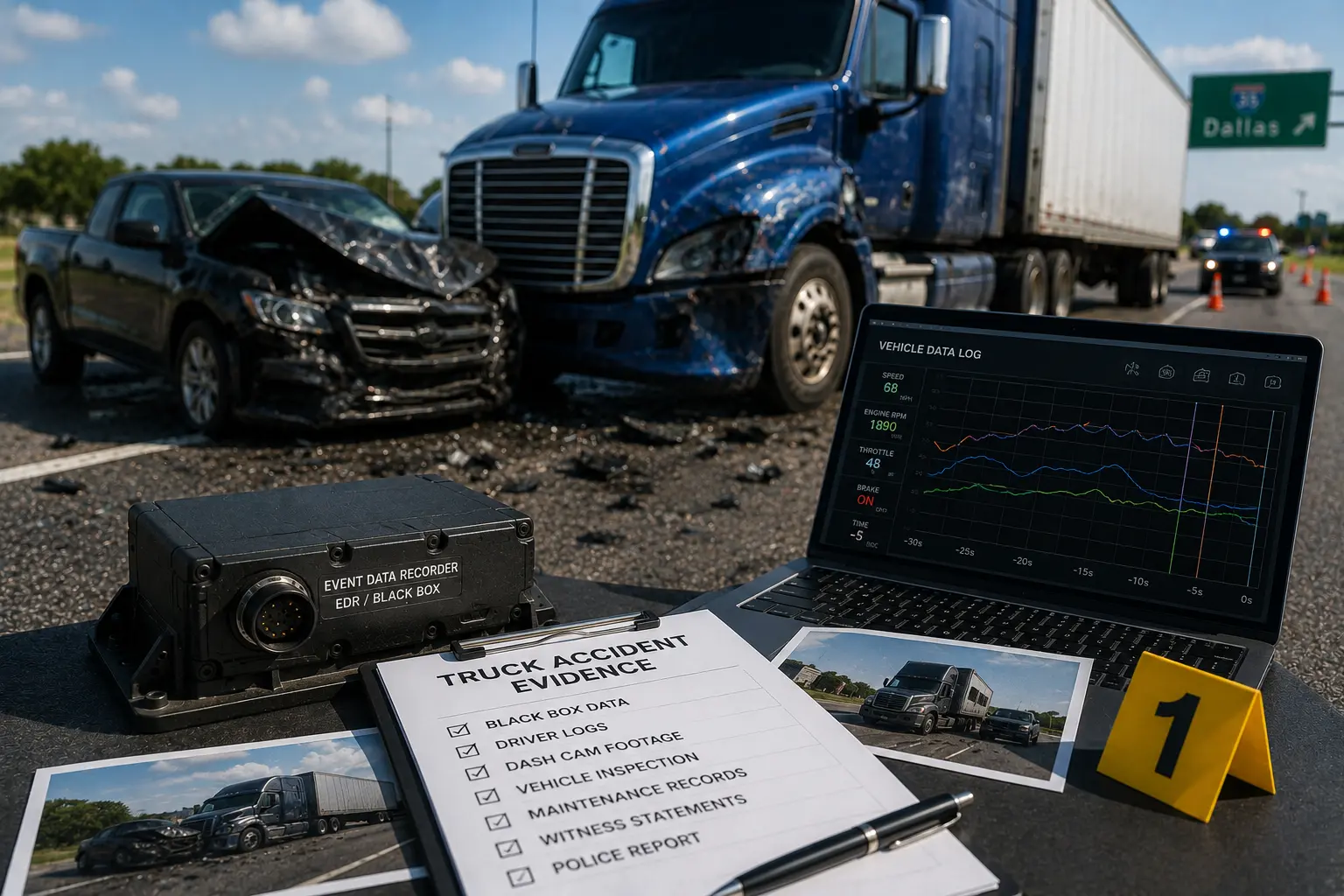
Commercial truck accidents remain one of the most dangerous types of collisions on the road today. Federal data shows these crashes account for a significant share of serious traffic incidents each year, often resulting in catastrophic injuries or death.
When these crashes happen, one piece of evidence can make or break a case: black box data. Understanding what this technology records and how it can be used is essential for anyone pursuing a truck accident claim.
What Is Black Box Data in a Commercial Truck?
The term “black box” refers to a group of onboard recording systems built into commercial trucks. These include Event Data Recorders (EDRs), Electronic Control Modules (ECMs), and Electronic Logging Devices (ELDs).
Unlike an aircraft’s black box, a truck’s recording system does not capture audio or video. Instead, it logs detailed performance data that paints a clear picture of what happened before, during, and after a crash.
What Information Does Black Box Data Capture?
Black box data can include a wide range of details, such as:
- Vehicle speed leading up to impact
- Brake application and force
- Throttle position and engine RPM
- Steering angle and sudden steering changes
- Seatbelt usage and airbag deployment
- GPS location and travel history
- Hours of service and driving logs
This information creates an objective record that no witness statement or police report can fully replicate.
How Black Box Data Helps Establish Fault
In a personal injury claim, the injured party carries the burden of proving negligence. Black box data offers powerful, unbiased evidence that can support that burden in several ways.
Speed at the Time of Impact
Data showing a truck traveling above the speed limit before a crash can be strong evidence of reckless driving. Excess speed reduces reaction time and increases the severity of a collision, particularly given the sheer weight of commercial trucks.
Hours of Service Violations
Driver fatigue is a leading cause of serious truck accidents. When black box data reveals a driver exceeded legal hours of service limits, it can support a claim based on fatigue-related negligence.
Braking Patterns
Braking data can point investigators toward the responsible party. Little to no braking may suggest distraction, while heavy or prolonged braking could indicate a mechanical failure tied to poor maintenance or a defective part.
Acceleration and Steering Behavior
Sudden acceleration or erratic steering inputs recorded in black box data can reveal driver impairment, distraction, or fatigue. These patterns often support arguments that a driver failed to exercise reasonable care.
Location and Route Verification
GPS data stored within a truck’s system can confirm or dispute a driver’s claimed whereabouts. It may also reveal whether a driver was behind schedule, which can point to a motive for speeding or other unsafe behavior.
Why Black Box Data Can Disappear Quickly
One of the biggest challenges in these cases is that black box data is not permanently preserved. Trucking companies are not required by law to retain it, and in many cases, they have little incentive to do so voluntarily.
Most systems record information in a continuous loop, meaning older data can be overwritten in as little as 30 days. This makes acting quickly absolutely critical for anyone who has been injured in a crash with a commercial vehicle.
Legal Tools to Preserve Evidence
An experienced truck accident attorney can send a spoliation letter, which is a formal legal demand requiring a trucking company to preserve all relevant evidence. If a company destroys data after receiving this notice, courts may allow a negative inference against them, which can significantly strengthen an injured party’s case.
Accessing and Interpreting Black Box Data
Obtaining black box data is not always straightforward. Federal privacy law generally requires permission from the vehicle owner, law enforcement involvement, or a court order before this data can be accessed.
Once obtained, the raw data must be interpreted by accident reconstruction experts using specialized software and equipment. This expert analysis transforms technical data into evidence that can be clearly presented in settlement negotiations or at trial.
Other Evidence That Strengthens a Truck Accident Case
While black box data is often the centerpiece of a strong claim, it works best when paired with additional evidence, including:
- Driver logs and inspection records
- Dashcam or traffic camera footage
- Cell phone records
- Maintenance and repair history
- Police reports and witness statements
Together, these pieces of evidence create a comprehensive picture that is difficult for insurance companies or trucking companies to dispute.
Steps to Take After a Truck Accident
The actions taken in the hours and days following a crash can significantly affect the outcome of a claim.
- Call for medical help and ensure a police report is filed
- Seek medical evaluation right away, even without obvious injuries
- Photograph the scene, vehicle damage, and surrounding conditions
- Collect contact information from any witnesses
- Avoid speaking with the trucking company’s insurance representatives without legal guidance
- Contact an attorney promptly to begin preserving black box data before it is lost
How an Experienced Attorney Can Help
Navigating a truck accident claim without professional legal support can put critical evidence at risk. Black box data is time-sensitive, technically complex, and often protected by privacy laws that make it difficult for individuals to access on their own.
An experienced personal injury law firm knows how to move quickly to send preservation letters, pursue court orders when necessary, and work with accident reconstruction experts to interpret the data accurately. This kind of dedicated legal support can be the difference between a denied claim and full, fair compensation for medical bills, lost income, and pain and suffering.
If you or a loved one has been injured in a truck accident, reaching out to a knowledgeable attorney as soon as possible gives you the best chance of preserving vital evidence and building the strongest possible case.
