

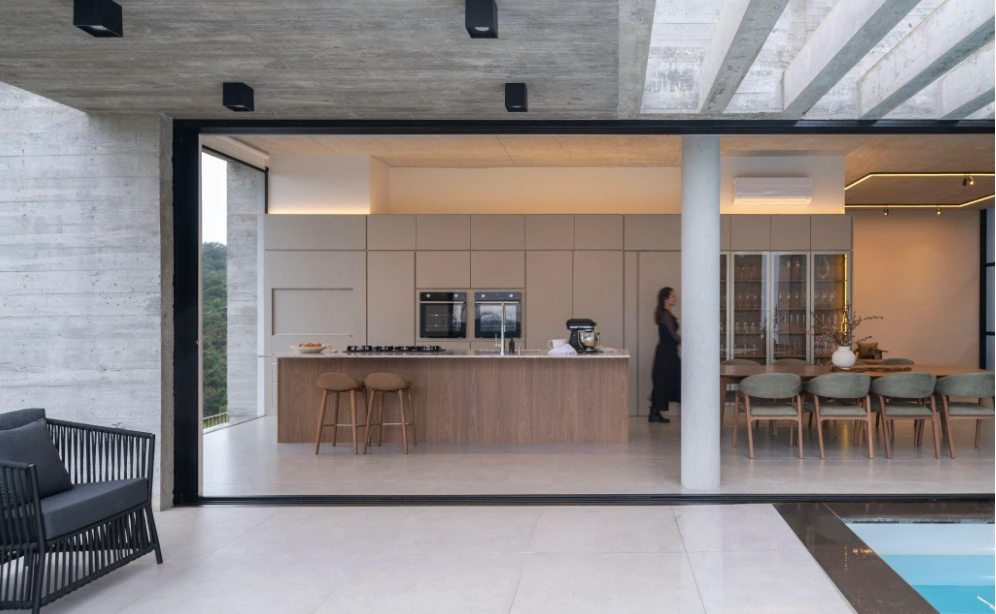
There was a time when the outdoor kitchen was treated as little more than a barbecue with a bit of countertop space. Today, that way homeowners view this space is completely different. It is more common to invest in outdoor living with the same level of care that is usually devoted to interiors, creating spaces that blend cooking, entertaining, and relaxation into one seamless experience. It doesn’t only elevate the living space and daily routine for the habitants of the house, but also increases potential market value of the home.
Design for the Way You Actually Entertain
Like many other spaces, the most successful outdoor kitchens begin with a simple question: how will the space really be used? A compact layout designed for weeknight family dinners requires a different approach than one intended for hosting large gatherings throughout the summer.
Just like with a regular kitchen, professional designers often organize outdoor kitchens around dedicated zones for cooking, preparation, serving, and socializing. This creates a natural workflow while preventing guests from gathering around the grill, allowing everyone to enjoy the space comfortably. Seating positioned nearby encourages conversation without interrupting the cooking process.
Just as importantly, consider how the outdoor kitchen connects to the interior of the home. Shorter distances between indoor and outdoor preparation areas reduce unnecessary trips and help the entire entertaining experience feel effortless.
Invest in Materials That Improve With Age
Unlike indoor kitchens, outdoor spaces must withstand sunlight, rain, changing temperatures, and humidity. That’s a lot to take for most materials. Selecting durable materials is therefore one of the most important design decisions.
Natural stone remains a favorite for countertops because it develops character over time while offering impressive durability. Stainless steel continues to dominate appliance choices thanks to its resistance to corrosion and ease of maintenance. Powder-coated aluminum cabinetry has also gained popularity, providing a contemporary appearance with minimal upkeep.
Textured finishes and matte surfaces tend to perform better outdoors than highly polished materials, as they conceal fingerprints, dust, and minor wear while complementing natural surroundings.
Create a Kitchen That Feels Like a Room
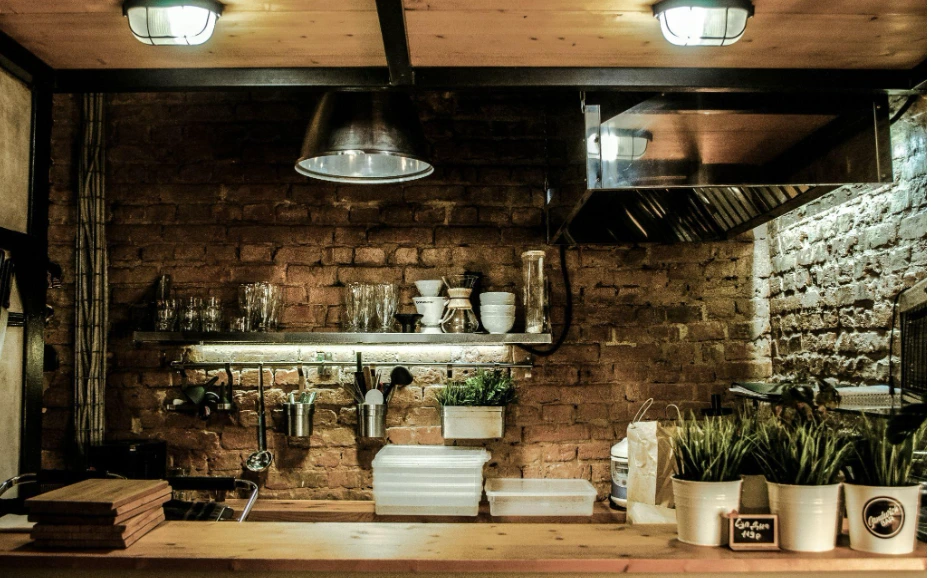
The latest outdoor kitchens no longer resemble standalone cooking stations. Instead, they are carefully layered environments with the comfort and personality of an interior.
Pergolas, covered roofs, and architectural screening define the space while offering protection from the elements. Outdoor rugs, upholstered seating, and decorative lighting soften the harder surfaces, making the kitchen feel inviting long after dinner has ended.
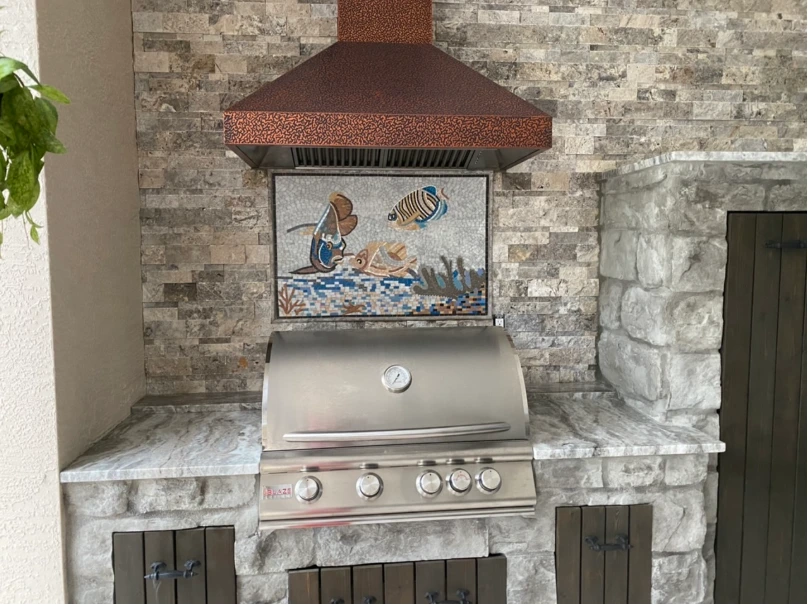
Thoughtfully selected finishes can also introduce individuality. Incorporating handcrafted tile, subtle mosaic artwork, or textured stone details helps create a focal point without overwhelming the overall design. The goal is not to recreate an indoor kitchen outdoors, but to establish a destination with its own distinctive atmosphere.
Prioritize Smart Storage
Storage is often underestimated during the planning process. While the grill naturally becomes the centerpiece, practical storage determines how enjoyable the kitchen will be over time.
Weatherproof drawers, enclosed cabinets, integrated waste bins, and dedicated storage for serving pieces help keep countertops uncluttered. Refrigerated drawers and beverage stations further reduce traffic between the house and the patio, especially when entertaining larger groups.
Designers increasingly recommend allocating more storage than initially seems necessary. Outdoor cooking frequently involves larger serving platters, grilling accessories, and seasonal items that benefit from having a permanent home.
Don’t Overlook Utilities
Exceptional outdoor kitchens balance beauty with invisible practicality. Adequate ventilation, electrical outlets, plumbing, gas connections, drainage, and shelter from prevailing winds all influence how comfortable the space will be throughout the year.
Planning these elements early prevents costly adjustments later while allowing appliances and cabinetry to integrate cleanly into the overall design. Even relatively compact outdoor kitchens benefit from thoughtful infrastructure, ensuring they perform as well as they look.
Bring Personality Through Color and Texture
Minimal palettes continue to dominate contemporary outdoor kitchens, but designers are increasingly introducing richer textures and carefully selected accents to prevent spaces from feeling overly uniform.
Earthy greens, warm terracotta, charcoal, and sandy neutrals blend naturally with gardens and surrounding landscapes. Timber details add warmth to stone and metal surfaces, while decorative mosaics can introduce subtle pattern and craftsmanship without competing with the architecture.
The most memorable outdoor kitchens achieve balance rather than perfection. They feel curated instead of overly styled, reflecting both the home’s architecture and the personalities of the people who gather there.
Think Beyond Summer
Perhaps the biggest shift in outdoor kitchen design is the move away from seasonal thinking. More and more often, homeowners want spaces that remain usable for much of the year rather than only during peak summer months.
Outdoor heating, retractable shading systems, weather-resistant furnishings, and adaptable lighting all contribute to a longer entertaining season. Combined with durable finishes and efficient layouts, these features turn the outdoor kitchen into a genuine extension of the home rather than an occasional luxury.
