

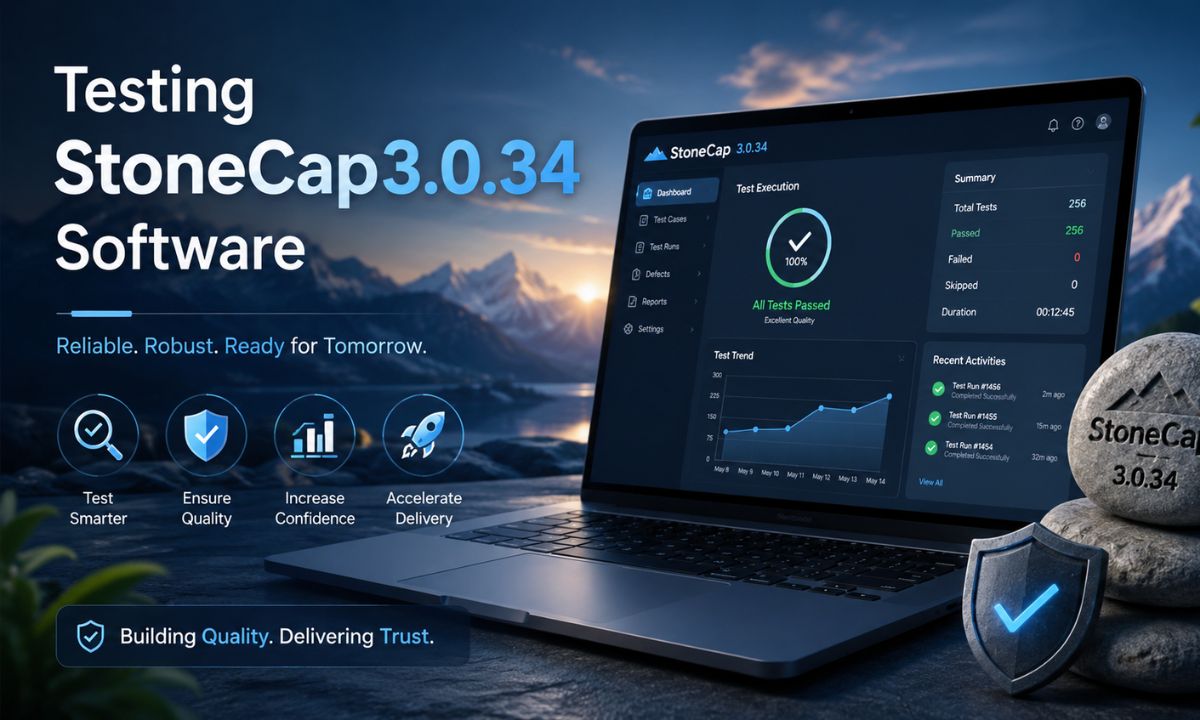
Struggling with software failures before launch? Testing StoneCap3.0.34 software gives development teams a reliable, structured path forward. It catches bugs early, improves stability, and ensures your application performs exactly as expected in real-world conditions.
Understanding the complete software testing process matters more than ever in 2026. StoneCap3.0.34 brings together automated testing tools, real-time monitoring, and cloud-based testing environment support into one powerful platform. This guide walks you through everything you need to know, from setup to advanced strategies.
What is Testing StoneCap3.0.34 Software?
Testing StoneCap3.0.34 software means running your application through a structured evaluation process. It uses software validation methods to check functionality, performance, and stability under various conditions. Teams use it to answer “how to test software effectively” with real, measurable results.
Simply put, it simulates real user scenarios to find weaknesses before users do. Think of it as a controlled fire drill for your application. You discover what breaks, fix it fast, and ship with confidence.
US development teams increasingly rely on StoneCap3.0.34 for its precise quality assurance techniques. It reduces production incidents and keeps software reliable across every update cycle.
Key Features of StoneCap3.0.34 Software
StoneCap3.0.34 packs serious power into a single platform. Its test automation framework, CI/CD integration, and real-time analytics make it the best way to test StoneCap software efficiently. Every feature solves a genuine team pain point.
Here are the standout capabilities:
- CI/CD Testing Pipeline integration for continuous deployment workflows
- Application Performance Monitoring with live metrics
- Cross-Platform Compatibility across OS, browsers, and devices
- Cloud-Based Testing Environment for scalable, flexible execution
- Test Case Management with organized tracking and reporting
These tools don’t just add convenience. They fundamentally improve how teams detect and resolve issues before release.
Read More: Droven.io Review: The AI Knowledge Platform Changing Tech Learning in 2026
Preparing for Testing StoneCap3.0.34 Software
Good preparation separates successful testing from chaotic guesswork. Before running a single test, verify your hardware, install dependencies, and create full system backups. Skipping this step is one of the most common software testing mistakes teams make.
Follow this pre-testing checklist:
| Requirement | Minimum Recommended |
| CPU | Quad-core 2.5 GHz+ |
| RAM | 16 GB |
| Storage | 50 GB free |
| OS | Windows 10 / Ubuntu 20.04+ |
| Network | Stable broadband |
Proper preparation directly answers “steps to set up a testing environment” and prevents costly failures mid-execution.
Setting Up the Testing Environment
A solid test environment setup creates the foundation for accurate, repeatable results. Configure your hardware correctly, install all required dependencies, and stabilize your network before starting. Rushing this phase causes flaky tests and unreliable data.
You will need these core tools:
- Automated testing tools for repeatable execution
- Load testing tools to simulate peak traffic
- Debugging techniques and monitoring utilities
Cloud environments like AWS pair naturally with StoneCap3.0.34. They give distributed US teams flexibility to scale without buying expensive on-site hardware infrastructure.
Testing Methodologies for StoneCap3.0.34
No single method covers everything. Combining multiple methodologies gives you complete coverage across functionality, performance, security, and usability. This answers “guide to functional and performance testing” better than any single approach ever could.
System integration testing, software reliability testing, and user acceptance testing all play distinct roles. Together, they ensure your application holds up under real-world pressure and user behavior patterns.
Functional Testing
Functional testing checks that every feature does exactly what it promises. It validates inputs, outputs, and user workflows against defined requirements. This is the foundation of knowing “how to find bugs in software” systematically.
Structured test case management keeps functional testing organized and consistent. Teams can track which scenarios passed, which failed, and what needs immediate attention without confusion or duplicate effort.
Performance Testing
Performance testing reveals how your system handles pressure. It tracks software performance metrics including CPU usage, memory consumption, throughput, and latency during heavy loads. This directly answers “how to measure software performance” with hard data.
| Metric | What It Tracks |
| CPU Usage | Processing load under stress |
| RAM Usage | Memory during peak activity |
| Throughput | Requests handled per second |
| Latency | System response speed |
Load testing tools simulate real traffic spikes, helping teams prepare for events like product launches or seasonal sales surges before they cause problems.
Compatibility Testing
Your US users run dozens of different device and browser combinations. Cross-platform compatibility testing ensures nobody gets a broken experience because of their setup. It covers Windows, Mac, iOS, Android, Chrome, Safari, and more.
Virtual machines and containers make this practical without owning twenty physical devices. They simulate real-world environments quickly and accurately, helping teams “how to fix software compatibility issues” before users ever report them.
Security Testing
Security vulnerabilities don’t wait for convenient moments to appear. Security testing within StoneCap3.0.34 evaluates authentication flows, encryption strength, and access controls systematically. This is essential for teams asking “how to ensure software reliability” long term.
Regular security sweeps catch weaknesses early, preventing data breaches that destroy user trust. For US businesses handling customer data, this isn’t optional. It’s the baseline expectation every serious application must meet.
Usability Testing
Fast, functional software still fails if users cannot navigate it comfortably. Usability testing watches how real people interact with your interface and identifies friction points developers typically overlook. It answers “how to improve software quality” from the human perspective.
Feedback from usability sessions feeds directly back into design decisions. Small interface improvements often produce dramatic gains in user satisfaction, adoption rates, and overall productivity metrics across your platform.
Streamlined Test Management
Disorganized testing wastes time and creates gaps in coverage. StoneCap3.0.34’s test case management system keeps every scenario tracked, assigned, and documented properly. Teams know exactly what’s been tested and what still needs attention.
A reliable bug tracking system pairs with test management to create a clean defect lifecycle. Log the issue, assign it, fix it, retest it, and close it. This structure supports “ways to optimize test execution” across every sprint.
Reporting and Metrics
Raw test data means nothing without clear interpretation. StoneCap3.0.34 converts results into readable reports that help teams and stakeholders make smart decisions. This answers “how to analyze test results” and “how to generate software testing reports” practically.
Track these key metrics consistently:
- Pass/fail rates per module
- Defect density across features
- Mean time to detect issues
- Regression rates between builds
When defect density spikes in one area, investigate immediately. That pattern rarely lies.
Common Issues and Fixes
Even experienced teams hit roadblocks with StoneCap3.0.34. Knowing the most frequent problems saves hours of frustrating troubleshooting. Here are the top issues and their fixes:
| Issue | Fix |
| Installation errors | Check dependencies and permissions |
| Flaky tests | Add proper wait conditions |
| Compatibility conflicts | Update virtual machine snapshots |
| Performance drops | Monitor for memory leaks |
Reading installation logs carefully solves most setup problems quickly. Never skip log review when something fails unexpectedly during configuration.
Best Practices for Maximum Performance
Smart testing beats more testing every time. Integrate StoneCap3.0.34 into your CI/CD testing pipeline early so bugs surface within hours instead of weeks. This is one of the most impactful software testing best practices any US team can adopt.
Follow these proven habits:
- Automate repetitive test scenarios first
- Reuse modular test scripts across projects
- Update test cases whenever features change
- Review failed tests before touching code
“Effective testing is not about finding bugs. It is about preventing them.” This mindset shifts your entire team’s approach to quality.
Real-World Use Cases
StoneCap3.0.34 delivers measurable results across multiple industries. Here are three compelling examples from real deployment scenarios:
E-Commerce: A major US retailer used StoneCap3.0.34 load testing before Black Friday. They reduced checkout page load time by 40% and saw a direct increase in completed purchases.
Healthcare: A patient data platform used StoneCap3.0.34 for software reliability testing and HIPAA compliance validation. Zero critical failures occurred during their first year post-deployment.
IoT: A connected device company tested firmware updates across thousands of simulated endpoints. They caught three critical API failures before pushing updates to live devices.
Performance Analysis & Limitations
StoneCap3.0.34 excels at performance optimization testing for mid to large scale applications. Its application performance monitoring tools give teams genuinely actionable real time insights. Most US enterprise teams find it fits naturally into existing workflows.
However, honest limitations exist worth acknowledging upfront:
- High resource consumption during large parallel test runs
- Legacy system integration requires custom adapters sometimes
- Learning curve for teams new to structured QA workflows
Understanding these constraints upfront helps you plan resources accurately and avoid nasty surprises during critical project phases.
Advanced Tips & Tricks
Ready to push further? These advanced strategies separate good QA teams from exceptional ones using StoneCap3.0.34 effectively.
Parallel Test Execution: Run multiple test suites simultaneously. This cuts total execution time dramatically without sacrificing coverage or accuracy across your test scenarios.
Data-Driven Testing: Replace hardcoded values with dynamic datasets. This multiplies your coverage significantly without multiplying your codebase or maintenance burden over time.
AI-Assisted Defect Prediction: Use historical test data to predict which modules will likely fail next sprint. StoneCap3.0.34’s analytics layer supports this kind of intelligent pattern analysis beautifully.
Frequently Asked Questions
What is StoneCap3.0.34 software used for?
StoneCap3.0.34 is used for structured software testing process management. It evaluates functionality, performance, security, and usability across applications. US development teams use it to catch bugs early and ensure reliable software delivery.
How do I set up a testing environment in StoneCap3.0.34?
Start by verifying system requirements including CPU, RAM, and OS compatibility. Install all dependencies, configure your network, and create system backups. Then install StoneCap3.0.34 and configure your preferred cloud-based testing environment or local setup.
What testing methodologies does StoneCap3.0.34 support?
It supports functional, performance, compatibility, security, and usability testing. It also covers system integration testing and user acceptance testing. Teams can combine multiple methodologies for complete application coverage.
How does StoneCap3.0.34 handle performance testing?
It tracks key software performance metrics including CPU usage, RAM consumption, throughput, and latency. Built-in load testing tools simulate peak traffic conditions, helping teams identify and resolve bottlenecks before production deployment.
Is StoneCap3.0.34 suitable for small development teams?
Yes, though smaller teams should expect a learning curve during initial setup. Starting with functional and automated testing before expanding to advanced features helps. The test automation framework scales well as your team grows and projects become more complex.
Can StoneCap3.0.34 integrate with CI/CD pipelines?
Absolutely. CI/CD integration is one of StoneCap3.0.34’s strongest features. It plugs directly into deployment workflows so testing runs automatically on every commit. This supports continuous quality assurance without adding manual overhead to your existing development process.
What are the most common issues with StoneCap3.0.34 testing?
Installation errors, flaky tests, and compatibility conflicts appear most frequently. Most issues resolve through careful log review, proper dependency installation, and maintaining updated virtual machine snapshots for cross-platform testing scenarios across different environments.
Final Thoughts
Testing StoneCap3.0.34 software is not a one-time task. It is an ongoing commitment to quality that pays dividends across every release cycle. Start with the fundamentals, build automation into your workflow early, and expand your methodology coverage over time.
US teams that treat testing as a core development practice rather than an afterthought consistently ship more stable, trustworthy software. The tools are here. The strategies are clear. Now it is time to put them to work.
